The Mumbai Metropolitan Reality Check: How Much Home Can You Really Afford in Mumbai, Navi Mumbai, or Thane?
The dream of owning a home in the Mumbai Metropolitan Region (MMR) is a powerful one. But between the glittering skyline of South Mumbai, the planned sectors of Navi Mumbai, and the booming suburbs of Thane, a critical question brings us down to earth: What is your true budget?
The gap between what a bank will lend you and what you can comfortably manage is especially wide in one of the world's most dynamic and expensive real estate markets. Let's decode affordability for the MMR.
Forget Global Rules: The Indian Lender's Framework (FOIR)
Indian banks use the Fixed Obligation to Income Ratio (FOIR). Simply put, they deduct all your existing fixed monthly obligations (EMIs, rent, etc.) from your net monthly income (after deductions like PF). The remaining amount is used to determine your potential Home Loan EMI.
-
Typical Threshold: Most banks prefer your total EMI obligations, including the new home loan, to be 40-50% of your net monthly income.
-
Example: If your net take-home is ₹1,50,000 per month and you have existing EMIs of ₹30,000, a bank might be comfortable adding a new home loan EMI of up to ₹45,000 (taking total EMI to 50% of income).
The Critical Caveat: This 50% is a bank's risk limit, not your comfort limit. Adopting it leaves little room for Mumbai's high cost of living, family responsibilities, and savings.
The True Affordability Formula for MMR
To find your real number, you must start with a deeply honest, Mumbai-specific budget.
1. Calculate Your Post-Expense Cash Flow
Start with your net monthly in-hand salary. Then subtract all essential living costs:
-
Current Rent (if applicable)
-
Household Help (cook, maid, driver)
-
Utilities & Society Maintenance: Electricity (high for ACs), water, gas, internet, and current society charges.
-
Groceries & Dining: Mumbai's premium is real.
-
Transport & Travel: Fuel, car EMI, or taxi/auto costs. Consider if your new location increases commute costs.
-
Family & Children: School fees, extracurriculars, childcare.
-
Existing Financial Commitments: Other loan EMIs, insurance premiums, SIPs.
-
Current Savings: Do not stop your investments for the home loan.
What remains is your true disposable income. Only a portion of this should go towards your new home loan EMI.
2. The "Total Monthly Home Cost" Drill-Down for MMR
Your EMI is just the start. Owning a home here comes with significant added outlays:
-
Society Maintenance Charges: Can range from ₹2-10 per sq.ft. monthly, depending on amenities (security, lifts, gym, pool). For a 1,000 sq.ft. flat, this can be ₹2,000 to ₹10,000+ monthly.
-
Property Tax: Paid annually to the municipal corporation (MCGM, NMMC, TMC).
-
Higher Utility Bills: Larger spaces and 24/7 common area lighting in societies increase costs.
-
Repairs & Annual Maintenance: Budget 1% of the property's value per year for upkeep, painting, and fixes.
-
Life Insurance & Term Plan: A must when you take on a large liability like a home loan.
Action Step: Create a mock budget with your prospective EMI plus these added costs (especially society charges). Does it still allow you to save and live without constant strain?
3. The Upfront Cost Reality: The 20-30% You Don't Finance
This is the biggest hurdle in MMR. Your down payment is just one part of the closing costs.
-
Down Payment: Typically 20% of the agreement value. For a ₹1.5 crore flat, that's ₹30 lakhs in savings.
-
Stamp Duty & Registration (Maharashtra):
-
Mumbai (MCGM): ~6% of agreement value or ready reckoner rate (whichever is higher).
-
Navi Mumbai (NMMC) & Thane (TMC): ~5-6% (slightly lower than Mumbai).
-
-
GST: 5% on under-construction properties (after 1/3rd abatement on land value).
-
Other Costs: Lawyer fees, brokerage (1-2%), loan processing fees, moving expenses.
-
The Emergency Cushion: Crucially, you must retain an emergency fund of 6-12 months of expenses separate from your down payment. Do not empty every account to buy the flat.
Total Upfront Cost Example: For a ₹1.5 crore under-construction flat in Thane, you may need ₹30 lakhs (down) + ₹8-9 lakhs (stamp duty) + other costs. Your liquid funds needed easily cross ₹40 lakhs.
The MMR Lifestyle Stress Test
Ask yourself: After the EMI and all new housing costs, will you have enough for:
-
Aggressive Retirement Savings? (EPF/PPF/NPS/SIPs should not stop).
-
Family Responsibilities? Parents' healthcare, children's future.
-
Mumbai's Social & Cultural Life? Occasional dinners, movies, weekends.
-
Annual Vacations?
-
Unexpected Shocks? Medical emergency, job transition.
If you're sacrificing all discretionary spending, you are over-leveraged. A home should not feel like a financial prison.
Location-Specific Considerations
-
Mumbai (Island City/Suburbs): Highest cost, premium for location & social infrastructure. Often smaller spaces for the budget. Check for older building maintenance issues.
-
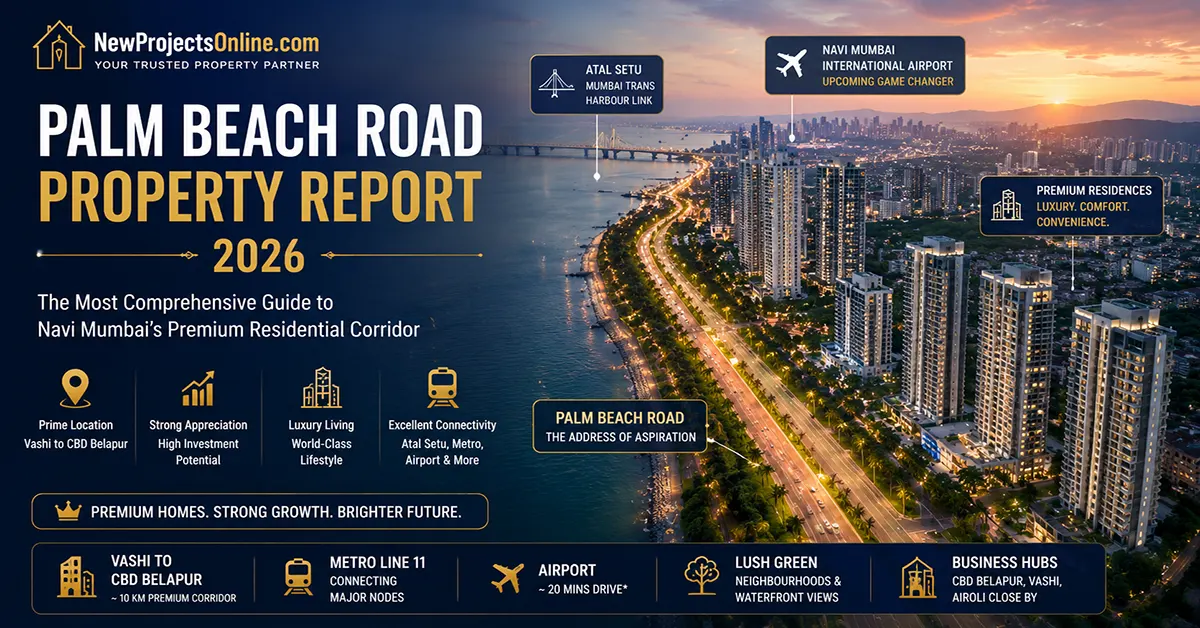
Navi Mumbai: More planned, wider roads. Prices vary significantly between nodes like Vashi (premium), Kharghar, and Panvel. Upcoming Navi Mumbai Airport and Trans-Harbour Link are major price influencers. Society charges can be high for amenity-rich complexes.
-
Thane: Rapid development, excellent connectivity via expressways and metro (expanding). Offers newer, larger projects often at a better per-sq.ft. value than central Mumbai. Consider micro-markets like Ghodbunder Road, Kolshet, etc.
The Final Verdict: A Conservative MMR Framework
Given market volatility and job dynamics, a prudent approach is:
-
Housing Cost at 30-35% of Net Income: Use your in-hand salary, not gross. This includes EMI + society charges + property tax savings.
-
Aim for a 20% Down Payment: It reduces loan burden and demonstrates financial discipline.
-
Keep Total Tenure Manageable: A 20-year loan is better than a 30-year one if the EMI fits the above rule—you save crores in interest.
-
Never Compromise on Liquidity: Your emergency fund is non-negotiable.
The Bottom Line for MMR:
In Mumbai, Navi Mumbai, and Thane, true affordability isn't about buying the most expensive home the bank allows. It's about securing a home that lets you thrive in the city, not just survive. It's about enjoying your balcony in Thane, your park in Navi Mumbai, or your neighbourhood in Mumbai without the constant shadow of financial anxiety.
Your Next Step: Before checking portals or meeting agents, meet a certified financial planner. Get an objective assessment. Then, armed with your real budget, explore options. Let prudence, not pressure, guide your most significant investment. In the long run, sustainable affordability is the only true sense of "ghar ki sukh-shanti."
Popular Property Searches
Explore Top Cities
Property Status
Ready To Move Flats in Navi Mumbai Ready To Move Flats in Raigad Ready To Move Flats in Dombivli Ready To Move Flats in Mumbai Under Construction Flats in Navi Mumbai Under Construction Flats in Mumbai Under Construction Flats in Thane Under Construction Flats in Kalyan Under Construction Flats in Dombivli Under Construction Flats in GhaziabadExplore More Real Estate Insights
Discover more valuable content to help with your property journey: